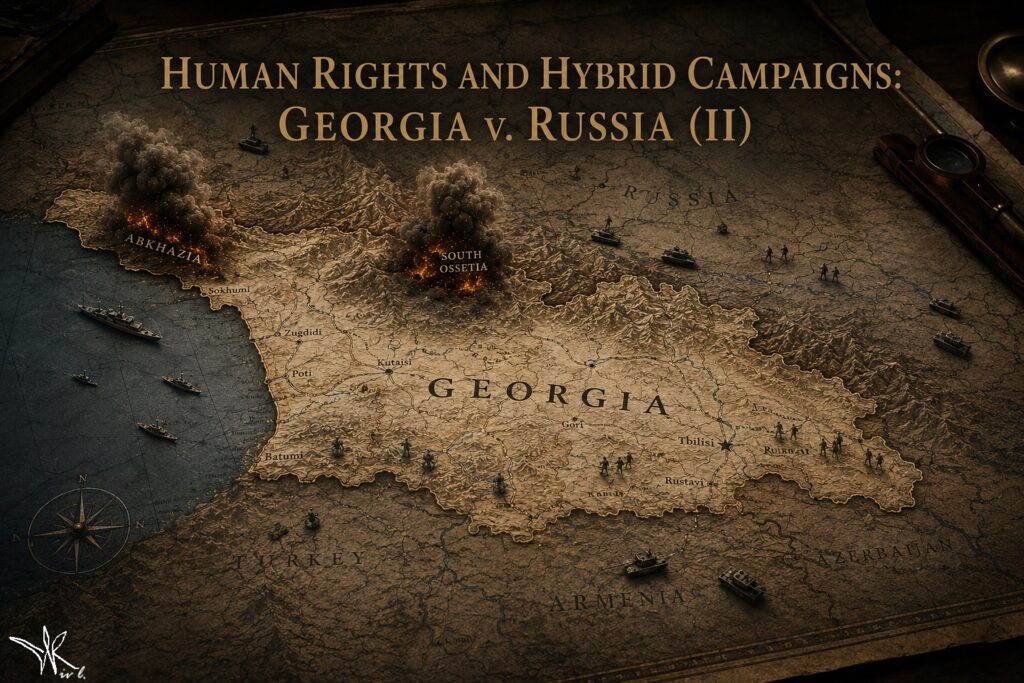
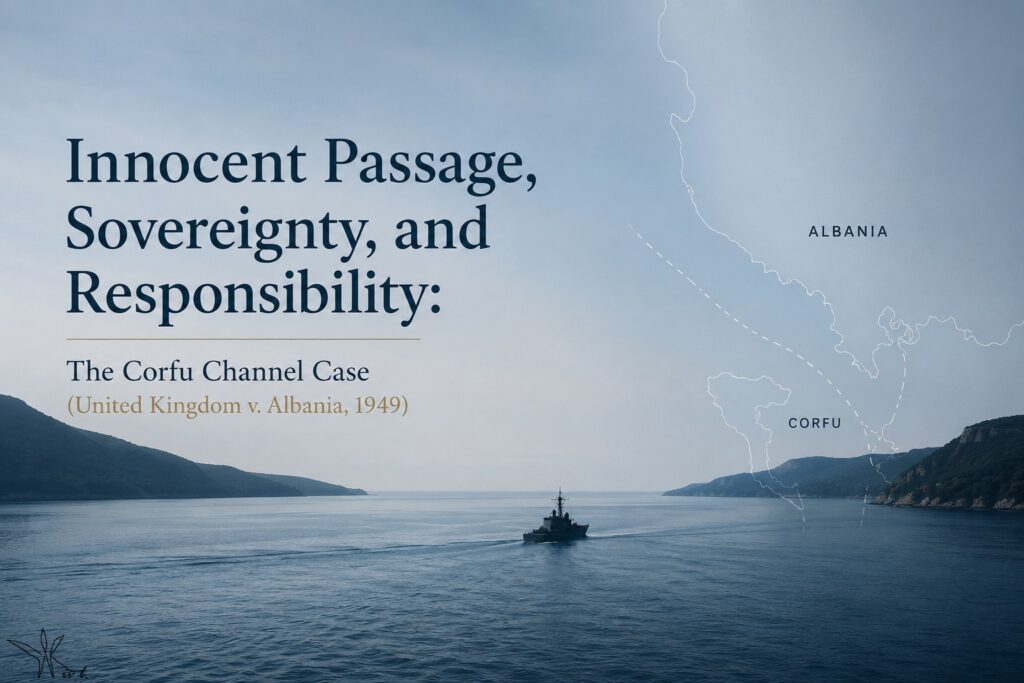
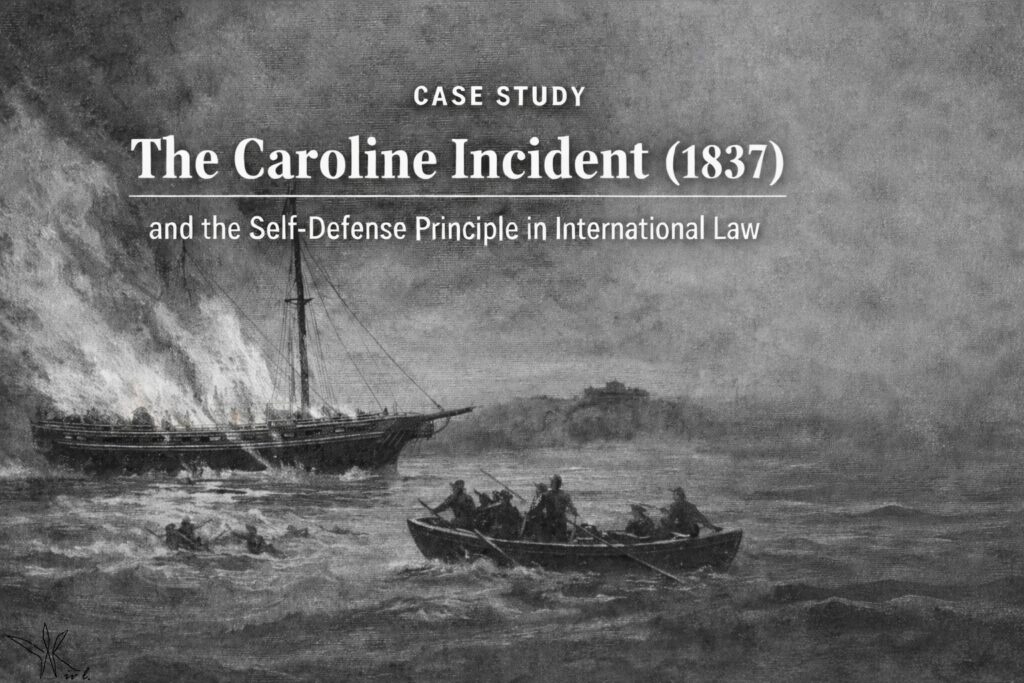
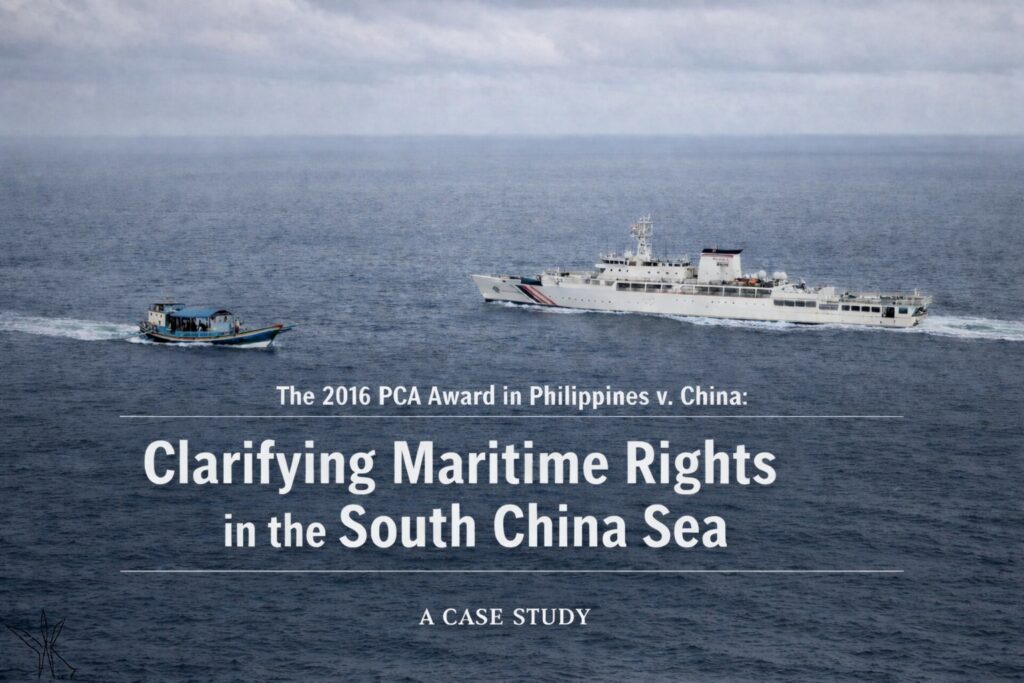
Case Studies Human Rights and Hybrid Campaigns: Georgia v. Russia (II)–An analysis of Georgia v. Russia (II) before the European Court of Human Rights, showing how doctrines of effective control and administrative practice ensure accountability for hybrid campaigns involving proxies, displacement, and propaganda. Innocent Passage, Sovereignty, and Responsibility: The Corfu Channel Case–The Corfu Channel Case (1949) was the first dispute decided by the ICJ. It clarified enduring principles of international law, including state responsibility by omission, the duty of due diligence, innocent passage rights, limits on self‑help, and the obligation of reparation—doctrines that continue to shape maritime security and contemporary international practice. The Caroline Incident (1837) and the Self-Defense Principle in International Law–Understand how the 1837 Caroline Incident shaped the enduring principles of necessity and proportionality in international law, influencing modern debates on sovereignty, military action, and security. The 2016 PCA Award in Philippines v. China: Clarifying Maritime Rights and Security in the South China Sea–Uncover the landmark 2016 PCA Award, which invalidated China’s nine‑dash line claims, clarified maritime rights under UNCLOS, and highlighted environmental and security implications for the South China Sea and beyond. Nicaragua v. United States: ICJ’s Landmark Ruling on Sovereignty and Use of Force – Examine the ICJ’s 1986 judgment in Nicaragua v. United States, a landmark case that clarified rules on sovereignty, non‑intervention, and lawful self‑defense while exposing the limits of enforcement in international law. Limits of Coastal State Enforcement Jurisdiction in the EEZ: The M/V Saiga (No. 2) Case – Explore the landmark M/V Saiga (No. 2) case before ITLOS, clarifying limits of coastal state enforcement in the EEZ, the doctrine of hot pursuit, and proportionality in maritime law. Occupation, Exploitation, and the Limits of Self‑Defense: Lessons from the Congo Case–Discover the ICJ Armed Activities case on Uganda and DRC sovereignty. See how the Court addressed self‑defense, occupation, humanitarian law, and resource exploitation in conflict zones, with lessons for maritime security attribution. Attribution and the Limits of Self‑Defense: Lessons from the Oil Platforms Case – Learn from the ICJ’s Oil Platforms judgment and its lasting impact on self‑defense, attribution, and security. Learn how necessity, proportionality, and evidence shape lawful military action under international law. The Enrica Lexie Case: Jurisdiction, Immunity, and Maritime Security– Explore the Enrica Lexie case, a landmark maritime dispute between India and Italy. Learn how UNCLOS, functional immunity, and flag-state jurisdiction shaped the tribunal’s ruling, balancing sovereign equality, accountability, and maritime security.